Solvent-Based Adhesives for Flexible Packaging
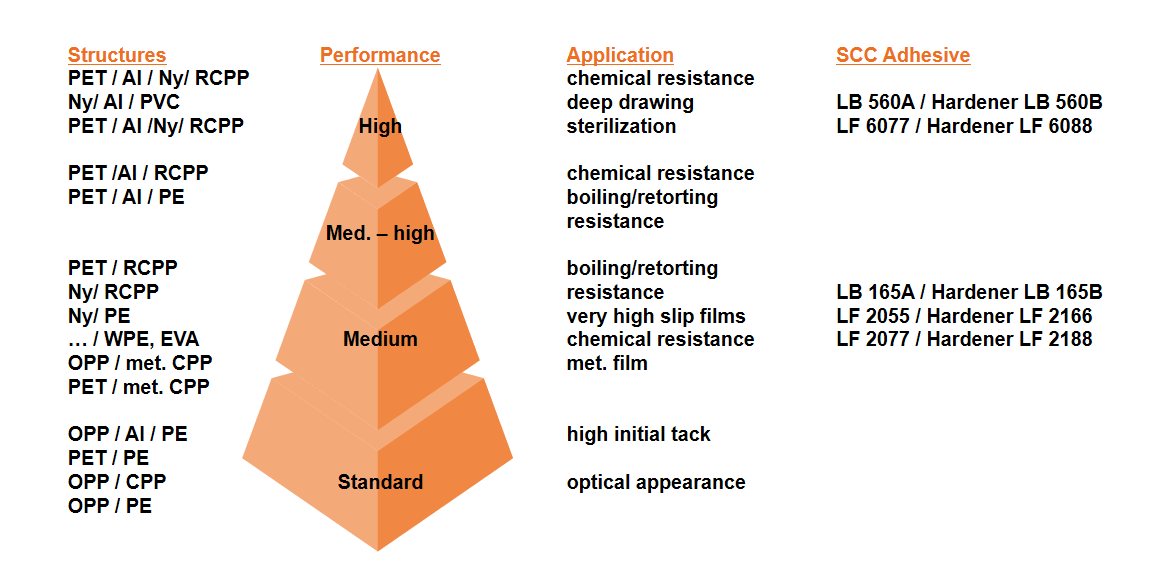
LB 165A / Hardener LB 165B
LB 560A / Hardener LB 560B
Solvent-based adhesives play a critical role in the flexible packaging industry, serving as the primary bonding solution for multi-layer film structures that constitute modern packaging materials such as stand-up pouches, retortable food bags, and pharmaceutical blister packs . These adhesives are typically formulated as two-component polyurethane systems that are dissolved in organic solvents like ethyl acetate, methyl ethyl ketone, or acetone before application .
Technical Composition and Chemistry
The majority of solvent-based laminating adhesives utilize polyurethane chemistry, consisting of a polyol component and an isocyanate hardener . When mixed, these components undergo a chemical cross-linking reaction that forms a durable, thermoset bond between substrates . The adhesive composition typically includes a polyurethane polymer derived from aliphatic or alicyclic polyisocyanates combined with polyether polyols and specialized amines, providing excellent adhesion properties while enabling future recyclability through controlled debonding mechanisms .
Performance Characteristics
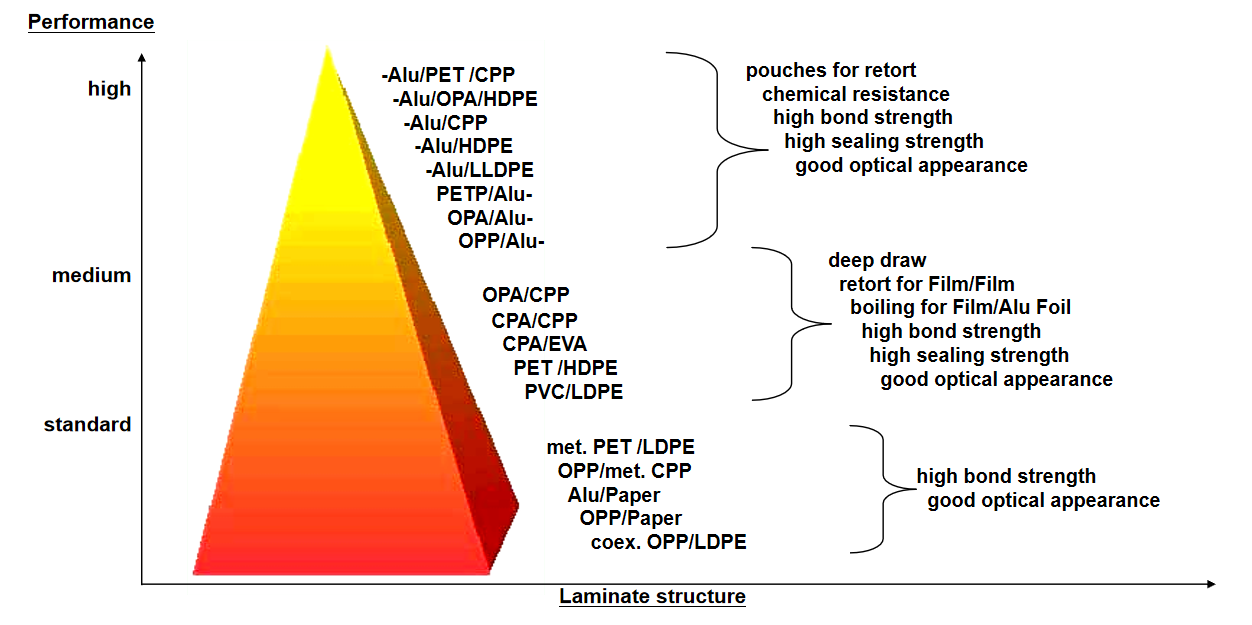
Solvent-based adhesives offer distinct advantages for demanding flexible packaging applications. They provide superior wetting and adhesion to challenging substrates including aluminum foil, metallized films, polyester (PET), oriented polypropylene (OPP), and polyethylene (PE) . Their rapid drying characteristics enable high-speed lamination processes, with advanced formulations achieving solid contents of 45-50%, significantly higher than the industry average of 25-30% . This higher solids content translates to reduced solvent consumption, lower energy requirements, and enhanced manufacturing efficiency .
These adhesives exhibit exceptional resistance to thermal processing conditions, with specialized grades designed to withstand pasteurization (up to 100°C), boiling water treatments, and retort sterilization at 121-135°C . They also demonstrate robust chemical resistance against aggressive filling goods, oils, and acidic or alkaline products .
Application Methods
Application is typically performed using gravure or smooth roll coating cylinders, followed by drying to remove solvents and curing at ambient or elevated temperatures . The adhesives are compatible with both rotogravure and flexographic printing equipment, ensuring versatility across different production lines.

Zhejiang Ruico Advanced Materials Co., Ltd is a professional flame retardants Manufacturers and Solvent Based adhesive for flexible package suppliers, our company was established in 2012, listed in China on 2019, Ruico is a national high-tech enterprise, Passed ISO9001 quality management system, have provincial-level R&D center, hired academicians, PhD, and other technicians totally 35 people, got 42 patents, the rule-maker of national flame retardant standards.
Application sustainability English
 España
 русский
 Deutsch
 No.188, Liangshan Road, Linghu Town, Nanxun District, Huzhou City, Zhejiang Province, China
 +86 (572)
2903236
+86 (572)
2903236 +86 (572)
2905222
+86 (572)
2905222 +86 15088303595
 +86 15088303595
