Global Distribution and Technical Support from Zhejiang Ruico In an evolving construction chemicals market, selecting a raw material supplier requires balancing product performance with supply security, technical responsiveness, and regulatory compliance. Zhejiang Ruico Advanced Materials Co., Ltd. ... read more
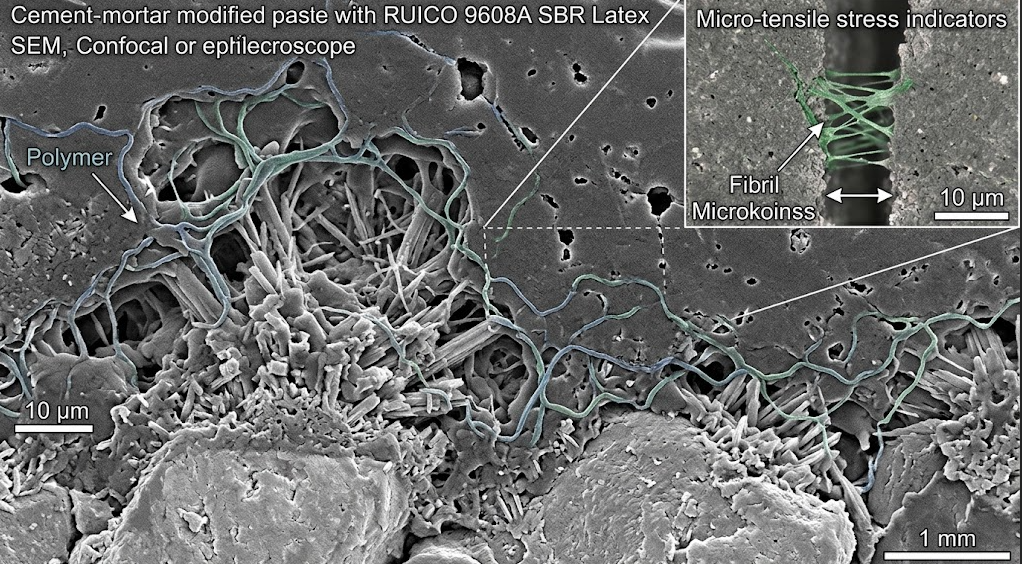
High-Traffic Screeds, Self-Leveling Underlayments, and Tile Adhesives Commercial and industrial flooring systems demand flooring screeds that withstand heavy forklift traffic, point loads, and dynamic impact. Standard cement screeds frequently crack or curl due to differential drying shrinkage. Modi... read more
Tailoring Mortar Formulations: Pilot Trials and Field Testing Protocols While technical data sheets outline typical physical values, optimizing polymer-modified cement formulations requires empirical testing tailored to specific sands, cements, and aggregate gradations. RUICO provides dedicated tech... read more
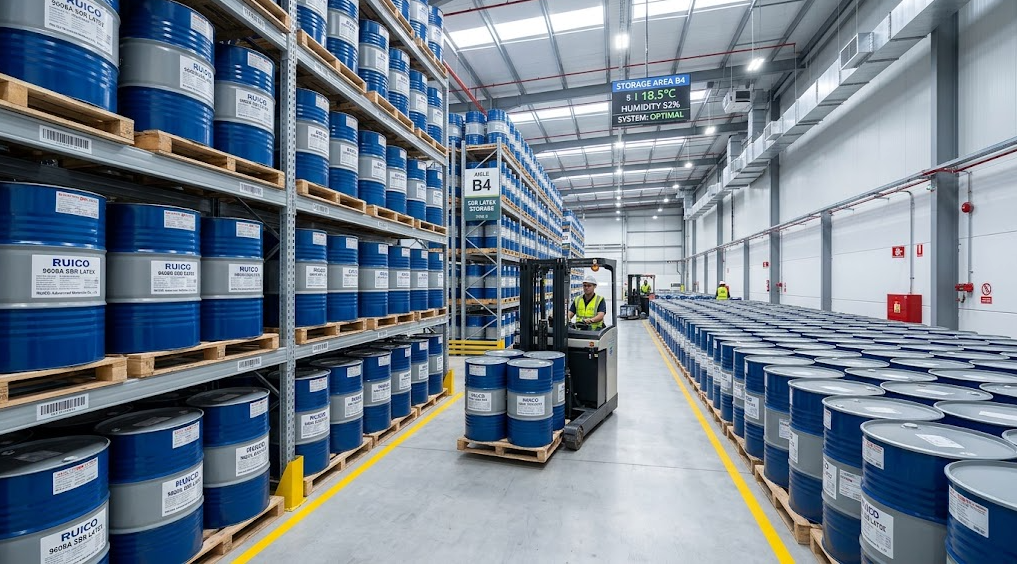
Industrial Hygiene, Microbial Protection, and Operational Safety Industrial safety and product hygiene are paramount when managing bulk chemical raw materials. RUICO 9608A SBR Latex is protected against microbial degradation during transit and storage in its unopened original packaging. However, han... read more
Best Practices for Packaging, Handling, and Long-Term Storage High-performance synthetic polymer dispersions require proper storage and handling to maintain batch consistency and reactivity. RUICO 9608A SBR Latex is manufactured under stringent quality controls, but maintaining its technical propert... read more

Zhejiang Ruico Advanced Materials Co., Ltd is a professional acrylic resins Manufacturers and flame retardants factory, our company was established in 2012, listed in China on 2019, Ruico is a national high-tech enterprise, Passed ISO9001 quality management system, have provincial-level R&D center, hired academicians, PhD, and other technicians totally 35 people, got 42 patents, the rule-maker of national flame retardant standards.
Application sustainability English
 España
 русский
 Deutsch
 No.188, Liangshan Road, Linghu Town, Nanxun District, Huzhou City, Zhejiang Province, China
 +86 (572)
2903236
+86 (572)
2903236 +86 (572)
2905222
+86 (572)
2905222 +86 15088303595
 +86 15088303595
