Production efficiency is critical for flexible packaging factories, and LB 165A/LB 165B is designed to adapt to high-speed dry laminating equipment. The main agent LB 165A owns low viscosity, delivering uniform surface wetting on all common packaging substrates without streaking or missing coating, ... read more
Many packaging manufacturers face adhesion failure when laminating thick PE films for high-temperature sterilization. Zhejiang Ruico’s LB 165A and LB 165B two-component solvent polyurethane adhesive solves this pain point perfectly. This adhesive system is specially optimized for 70–130 μm thick PE... read more
For flexible packaging factories struggling with poor heat resistance, weak adhesion on thick PE and strict food safety standards, Zhejiang Ruico Advanced Materials launches LB 165A main agent matched with Hardener LB 165B, a two-component solvent-based polyurethane adhesive tailored for high-perfor... read more
Are you seeking a reliable dry lamination adhesive that withstands boiling and high-temperature retort sterilization for food packaging? Zhejiang Ruico Advanced Materials proudly presents LB 165A paired with Hardener LB 165B, a medium-to-high-end two-component solvent polyurethane adhesive built for... read more
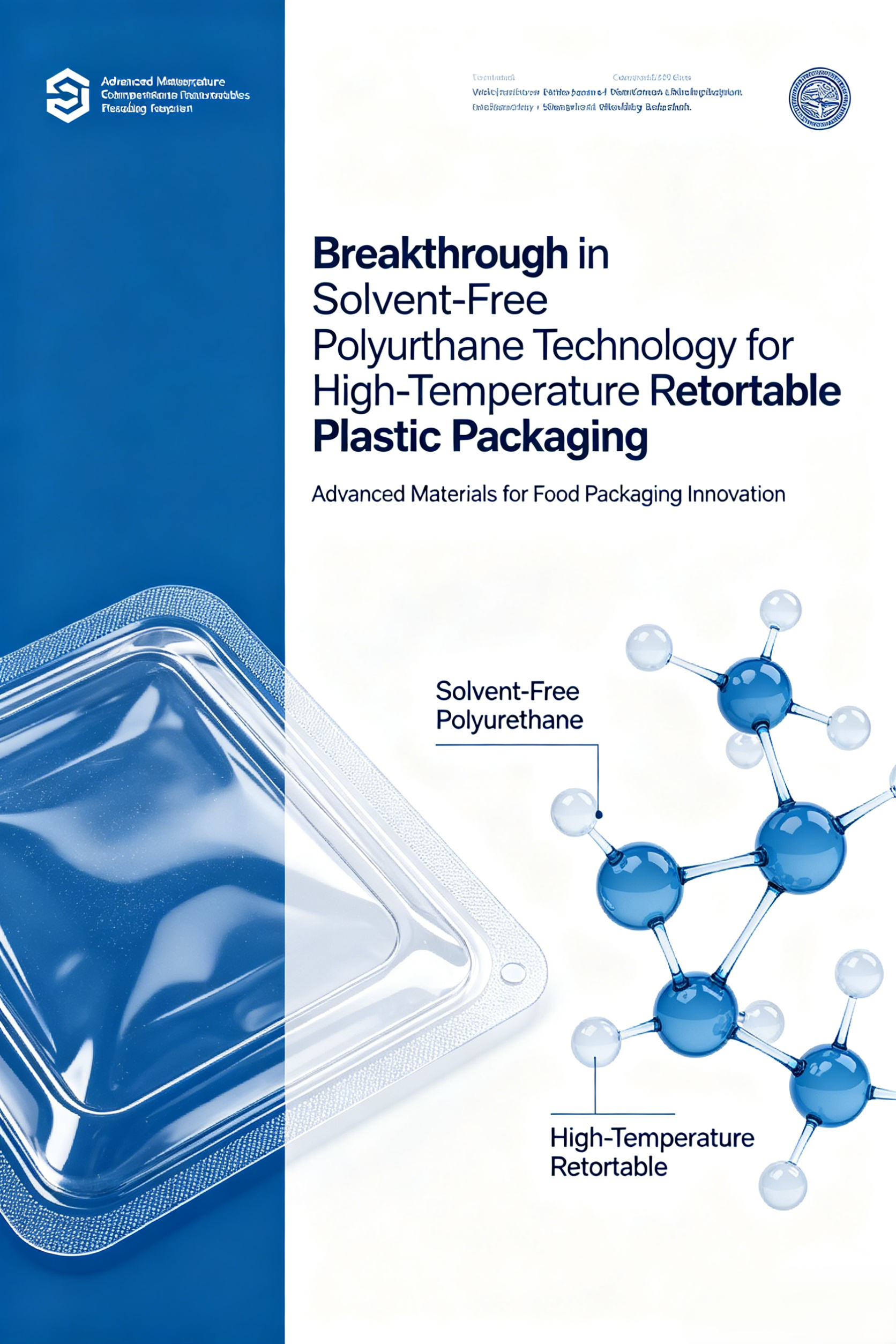
Retort packaging remains an important segment of the food packaging industry, particularly for products requiring extended shelf life and thermal processing. Packaging materials used in these applications are often evaluated under elevated temperature conditions to better understand their performanc... read more

Zhejiang Ruico Advanced Materials Co., Ltd is a professional acrylic resins Manufacturers and flame retardants factory, our company was established in 2012, listed in China on 2019, Ruico is a national high-tech enterprise, Passed ISO9001 quality management system, have provincial-level R&D center, hired academicians, PhD, and other technicians totally 35 people, got 42 patents, the rule-maker of national flame retardant standards.
Application sustainability English
 España
 русский
 Deutsch
 No.188, Liangshan Road, Linghu Town, Nanxun District, Huzhou City, Zhejiang Province, China
 +86 (572)
2903236
+86 (572)
2903236 +86 (572)
2905222
+86 (572)
2905222 +86 15088303595
 +86 15088303595
