
1. Introduction: What Is NBR Latex? NBR latex (acrylonitrile-butadiene rubber latex) is a colloidal dispersion of nitrile rubber particles in water. It belongs to the family of synthetic rubber latices and is produced via emulsion polymerization of acrylonitrile (ACN) and butadiene monomers. Unlike ... read more
NBR Latex in Glove Manufacturing — From Formulation Science to Healthcare and Beyond Introduction: The Era of Advanced Protective Gloves Protective gloves have evolved far beyond basic barriers. Today’s gloves are engineered materials designed to protect workers, clinicians, and everyday users from ... read more
NBR Latex in Industrial and Protective Gloves — Material Insights, Performance Advantages & Market Potential Introduction In modern industrial and occupational safety environments, protective gloves are indispensable. Whether used in automotive workshops, chemical plants, or general labor protec... read more
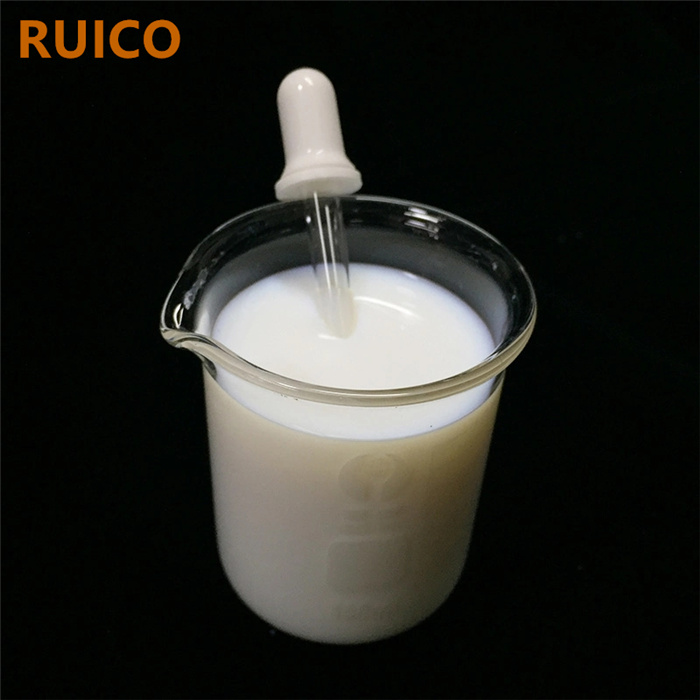
Polyurethane dispersions (PUDs) are waterborne polyurethane systems in which polymer particles are dispersed in water rather than dissolved in organic solvents. Over the past three decades, PUD technology has evolved from a niche alternative to solvent-based polyurethane into a dominant platform... read more

Nitrile Butadiene Rubber (NBR) latex has become the dominant raw material for disposable medical examination gloves worldwide. Driven by increasing concerns over latex protein allergies, stringent infection control protocols, and growing healthcare demand, NBR latex has largely replaced natural rubb... read more

Zhejiang Ruico Advanced Materials Co., Ltd is a professional acrylic resins Manufacturers and flame retardants factory, our company was established in 2012, listed in China on 2019, Ruico is a national high-tech enterprise, Passed ISO9001 quality management system, have provincial-level R&D center, hired academicians, PhD, and other technicians totally 35 people, got 42 patents, the rule-maker of national flame retardant standards.
Application sustainability English
 España
 русский
 Deutsch
 No.188, Liangshan Road, Linghu Town, Nanxun District, Huzhou City, Zhejiang Province, China
 +86 (572)
2903236
+86 (572)
2903236 +86 (572)
2905222
+86 (572)
2905222 +86 15088303595
 +86 15088303595
