Polymers are unlike other types of materials because of their high molecular weight. Molecular weight is the value used to express the size of a molecule. Water, for example, has a molecular weight of 18 atomic mass units. Polymers are much larger, with molecular weights ranging from tens of thousa... read more
Nitrile elastomers are emulsion polymers produced using rubber polymerization techniques. Also known as nitrile emulsions or nitrile latexes, these are dispersions of acrylonitrile and butadiene — or sometimes styrene — in water. Nitrile elastomers are true colloids, defined as a homogenous amorpho... read more
Moisture vapor transmission rate, also called water vapor transmission rate (WVTR), is the amount of water vapor that passes through a substance or material over a specific period of time. Having the ability to measure MVTR is a key factor in controlling moisture in a wide range of products. Manuf... read more
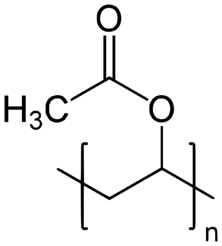
Vinyl acetate monomers (VAM) are essential building blocks for a large number of water-based polymers. Vinyl acetate is prepared from ethylene by reacting it with oxygen and acetic acid over a palladium catalyst. The basic chemical reaction is shown below, along with the chemical structure of vinyl... read more
With problem-detecting sensors, wireless connections, cloud-based security and real-time navigation, it’s easy to think that the high-tech features in today’s hot rides are all electronic. That, however, would be overlooking some of the most remarkable technologies that are making cars safer, quiet... read more

Zhejiang Ruico Advanced Materials Co., Ltd is a professional acrylic resins Manufacturers and flame retardants factory, our company was established in 2012, listed in China on 2019, Ruico is a national high-tech enterprise, Passed ISO9001 quality management system, have provincial-level R&D center, hired academicians, PhD, and other technicians totally 35 people, got 42 patents, the rule-maker of national flame retardant standards.
Application sustainability English
 España
 русский
 Deutsch

 No.188, Liangshan Road, Linghu Town, Nanxun District, Huzhou City, Zhejiang Province, China
 +86 (572)
2903236
 +86 (572)
2905222
 +86 15088303595
 +86 15088303595

