When discussing blackout fabric production, attention is often placed on individual formulation ingredients. In practice, coating performance is influenced by the interaction between raw materials, production equipment, operating procedures, and quality management. A coating formulation may perform ... read more

Production efficiency is influenced by many factors, including equipment design, operator experience, process management, and raw material selection. While production lines may differ from one factory to another, selecting compatible coating materials can simplify routine manufacturing activities. W... read more
Formulation development is an ongoing process in textile coating production. New customer requirements, different fabric constructions, production equipment, and regional standards may all influence how a coating formulation is prepared. During formulation work, manufacturers often evaluate the rela... read more
Producing blackout fabrics involves much more than achieving the required coating weight or opacity. For manufacturers supplying large projects, consistency between production batches is often as important as the performance of an individual roll of fabric. Batch-to-batch consistency begins with raw... read more
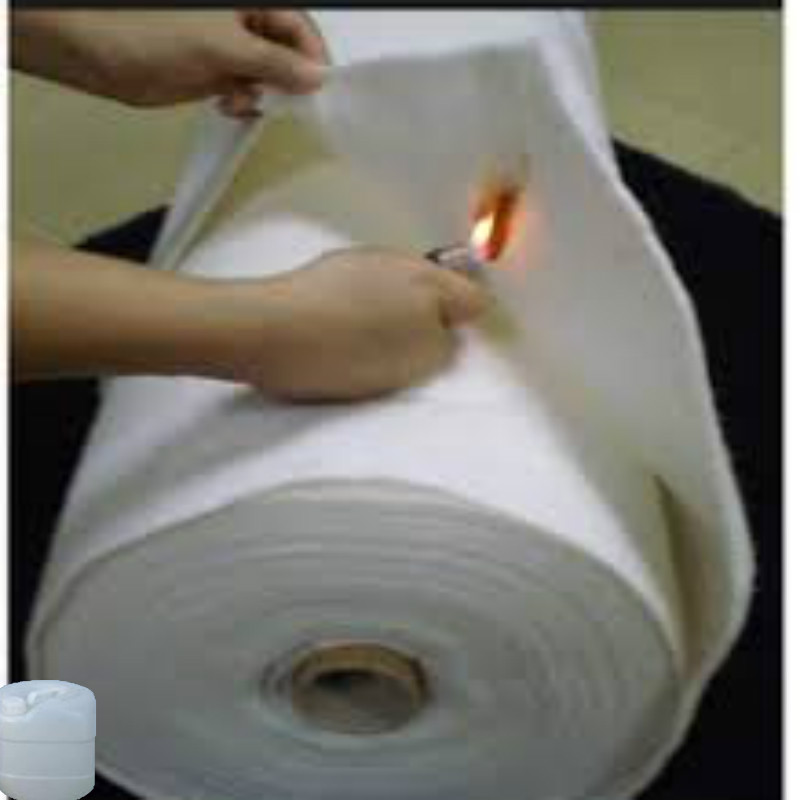
Blackout fabrics are used in a wide range of interior environments where control of natural light is part of the overall building design. Residential curtains, hotels, offices, healthcare facilities, schools, and public buildings all have different expectations for coated textile performance. As a r... read more

Zhejiang Ruico Advanced Materials Co., Ltd is a professional acrylic resins Manufacturers and flame retardants factory, our company was established in 2012, listed in China on 2019, Ruico is a national high-tech enterprise, Passed ISO9001 quality management system, have provincial-level R&D center, hired academicians, PhD, and other technicians totally 35 people, got 42 patents, the rule-maker of national flame retardant standards.
Application sustainability English
 España
 русский
 Deutsch
 No.188, Liangshan Road, Linghu Town, Nanxun District, Huzhou City, Zhejiang Province, China
 +86 (572)
2903236
+86 (572)
2903236 +86 (572)
2905222
+86 (572)
2905222 +86 15088303595
 +86 15088303595
