Choosing an SBR latex for artificial turf backing involves more than checking one specification. Manufacturers need to consider how the material behaves within the complete formulation and under actual production conditions. Several parameters are particularly relevant during material evaluation. 1... read more
Outdoor artificial turf can be exposed to rainfall, irrigation, humidity, and repeated wet-dry cycles. Water resistance is therefore an important consideration when developing a backing formulation. However, water resistance is not determined by the latex alone. The entire coating system and finish... read more
Selecting a backing material is an important decision in artificial turf manufacturing. SBR latex and polyurethane (PU) are two material options used in turf backing systems, depending on product design and production requirements. They differ in chemistry, formulation, processing, and cost structu... read more
Tuft binding is an important consideration in artificial turf manufacturing. It describes how securely the grass yarns are held within the backing structure. During tufting, yarns are inserted through a primary backing. Without a suitable backing system, the yarns may not achieve the required ancho... read more
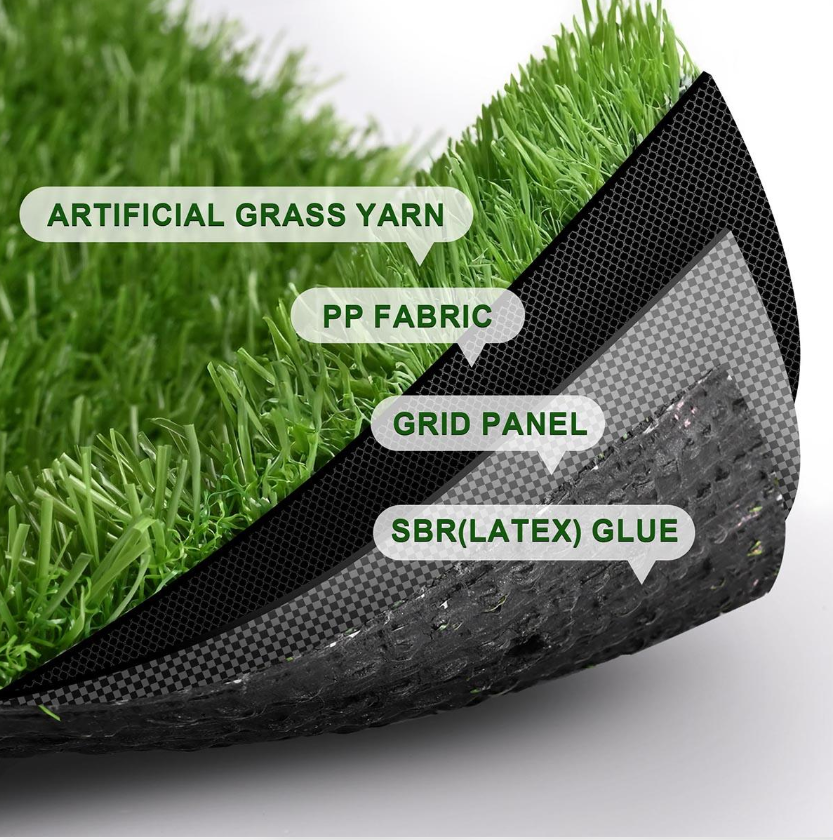
Artificial turf is widely used in sports facilities, landscaping, recreational areas, and commercial projects. While the grass fibers determine the appearance of the surface, the backing system plays an important role in holding the turf structure together. Styrene-butadiene rubber (SBR) latex is a... read more

Zhejiang Ruico Advanced Materials Co., Ltd is a professional acrylic resins Manufacturers and flame retardants factory, our company was established in 2012, listed in China on 2019, Ruico is a national high-tech enterprise, Passed ISO9001 quality management system, have provincial-level R&D center, hired academicians, PhD, and other technicians totally 35 people, got 42 patents, the rule-maker of national flame retardant standards.
Application sustainability English
 España
 русский
 Deutsch

 No.188, Liangshan Road, Linghu Town, Nanxun District, Huzhou City, Zhejiang Province, China
 +86 (572)
2903236
 +86 (572)
2905222
 +86 15088303595
 +86 15088303595

