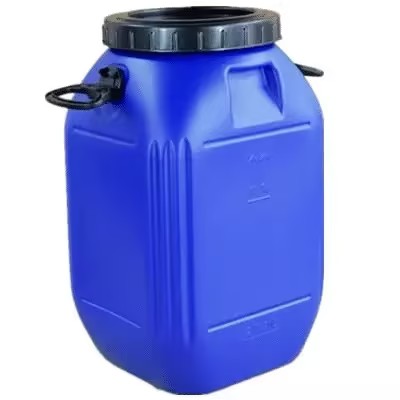
Why Dispersion Stability Matters in Cement Formulations When developing polymer-modified cement products, many formulation engineers focus on the final mechanical properties. But before reaching the final product, there is another important question: How well does the polymer latex disperse and inte... read more
Stronger Bonding Starts with Better Polymer Modification In construction materials, adhesion is often one of the key factors affecting the performance of a cement-based product. A mortar may need to adhere to concrete, masonry, stone, or other substrates. For manufacturers, this means that selecting... read more
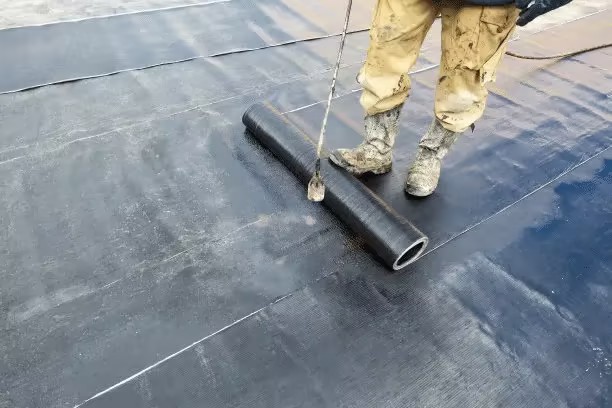
SBR Latex for Better Performance in Cement-Based Waterproofing Waterproofing is one of the most important functions in modern construction. From concrete structures and foundations to bathrooms, balconies, roofs, and underground structures, cement-based waterproofing materials are widely used to hel... read more
The Role of NBR Latex in High-Performance Medical and Industrial Gloves By Zhejiang Ruico Advanced Materials Gloves may appear to be simple products, but their performance depends on sophisticated material science and carefully controlled manufacturing processes. Whether a glove is used by a doctor,... read more
NBR Latex for Gloves: Advancing Safety, Performance, and Manufacturing Efficiency By Zhejiang Ruico Advanced Materials The global demand for high-performance protective gloves continues to grow across healthcare, laboratories, food processing, automotive, electronics, chemical handling, and general ... read more

Zhejiang Ruico Advanced Materials Co., Ltd is a professional acrylic resins Manufacturers and flame retardants factory, our company was established in 2012, listed in China on 2019, Ruico is a national high-tech enterprise, Passed ISO9001 quality management system, have provincial-level R&D center, hired academicians, PhD, and other technicians totally 35 people, got 42 patents, the rule-maker of national flame retardant standards.
Application sustainability English
 España
 русский
 Deutsch
 No.188, Liangshan Road, Linghu Town, Nanxun District, Huzhou City, Zhejiang Province, China
 +86 (572)
2903236
+86 (572)
2903236 +86 (572)
2905222
+86 (572)
2905222 +86 15088303595
 +86 15088303595
